
Many IT departments today are under enormous pressure. They are expected to deliver faster, more, and better IT services — all at lower cost. These sky-high expectations often leave CIOs in a weak position, frequently not on equal footing with their fellow executives. It’s an uneven battle. Time for repositioning and action!
The and-and-and illusion
Inexpensive, Fast and Good all at the same time?
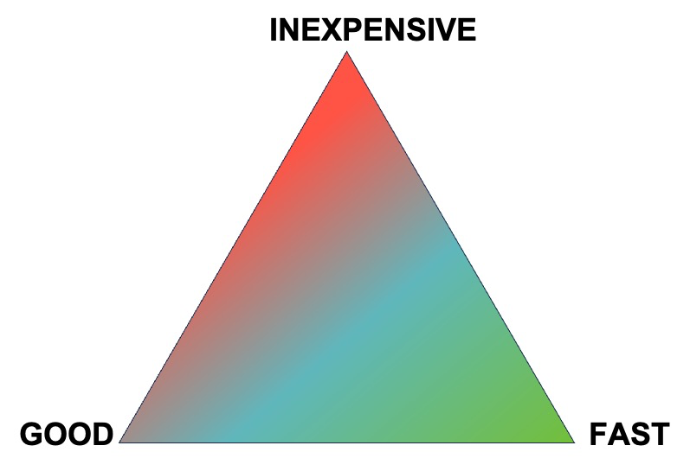
We all know the project triangle: good – inexpensive – fast. You can pick two, never all three. Yet IT departments are often pushed into the 'all of the above' illusion. Out of fear of being difficult, they give in to business pressure — client-pleasing instead of client-focused. True strength lies in daring to say: “STOP!”
IT is a strategic production asset
IT doesn’t deliver gadgets — it provides technology that is fundamental to producing business and decision-making information. It is just as crucial a production asset as machines in manufacturing. Yet IT often doesn’t receive the same level of care and priority in investment. Invest in IT as if the future of your business depends on it — because it does.
Reputation management for IT
Large companies have PR professionals to protect brand reputation — because reputation means trust. But who protects the reputation of the IT department? IT must take charge of its own positioning and communication. If you don’t tell your story, others will — and rarely in your favor. True, IT professionals aren’t always communication experts. But that’s no excuse. Start by sharing your mission. Make clear what IT stands for, and above all: what the business can expect from IT — and what IT expects from them for a successful partnership.

Two-way communication: the bridge between IT and the business
A good reputation starts with open, two-way communication. The IT department is more than a helpdesk tucked away at the other end of the building. Show that! Be proactive, clear, and transparent. Communicate openly about outages, solutions, expectations, and shared responsibilities. This builds trust and resilience. Even when things go wrong, IT must show its face. Inform users immediately about the impact, the fix, and the timeline. By communicating in a structured way, you create calm and trust — even in difficult moments.
Don’t let communication be your blind spot
Don’t wait for the business to understand you. IT must take the initiative itself. And when needed, bring in a communication professional with experience in reputation management. This strengthens the visibility, reliability, and support for your IT organization
About the author: Jan Massier is the founder of BePresent with broad expertise in IT Management, XLA Management, change management, and IT communication. With 30 years of experience at various (management) levels in the IT world — always at the intersection of people and technology — he supports IT professionals and organizations in delivering valuable IT services.